Five Rules for Styling a Mediterranean Terrace
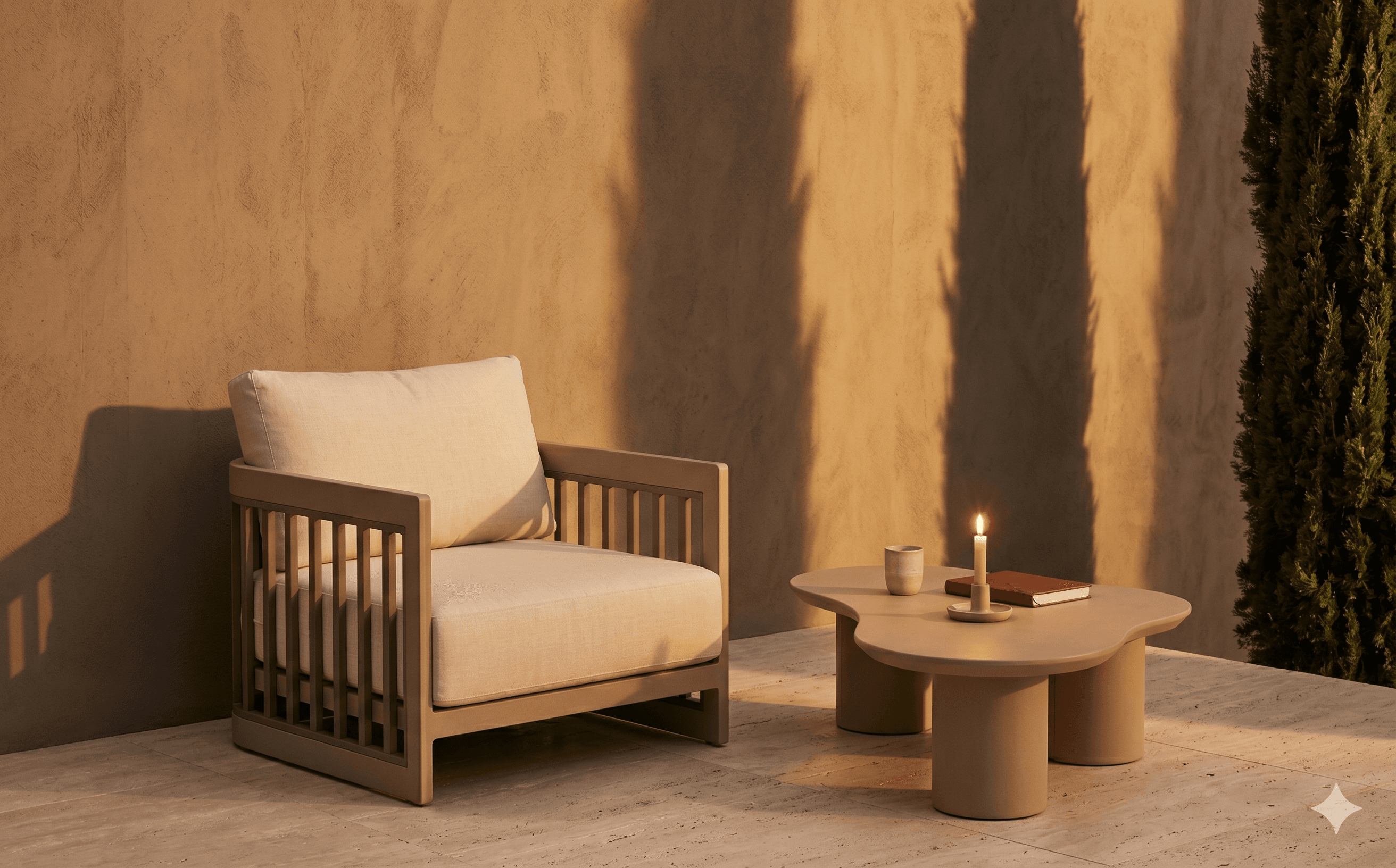
A Mediterranean terrace isn’t a style. It’s a logic.
It’s the set of decisions that the people who have lived beside the sea for three thousand years have been refining — adding candles, removing chairs, painting walls white, leaving a cushion out in the rain on purpose, finding a chipped ceramic bowl at a market in Apulia and deciding it’s perfect.
Here are five rules we’ve picked up from watching them.
One — Fewer things, better placed. A Mediterranean terrace is never crowded. It’s generous with space, restrained with objects.
The temptation is to fill every corner. Resist it. Leave one corner empty. The emptiness itself is an invitation to do nothing there — which, in a culture that invented the siesta, is a legitimate use of space.
Two — The palette comes from the landscape, not the paint shop.
Terracotta, olive, sand, warm charcoal, off-white, stone grey. Muted clay. If it could occur naturally within a hundred kilometres of a Tuscan village, it belongs. If it couldn’t — fluorescents, cold blues, primary colours — it doesn’t.
Three — Materials should be allowed to age.
Teak goes silver. Bouclé softens. Terracotta tiles develop a white bloom. This is good. This is the whole point. The Mediterranean aesthetic doesn’t resist time — it collaborates with it.
Four — Candlelight, not floodlight.
The single most overlooked decision. Bright overhead light kills the mood of any terrace instantly. Use pools of warm light instead: a few candles on the table, brass lanterns on the wall, a pendant low over the dining surface. The goal is for faces to glow and everything else to recede.
Five — One living thing, always.
An olive tree in a terracotta planter. A bay tree. A row of potted rosemary. A single bougainvillea. Without one living element, a terrace becomes a showroom. With even one, it becomes a place.
That’s it. Not advice on what to buy — advice on what to do with what you already have.
The terrace does the rest.