Teak: Why It's the Gold Standard of Outdoor Wood
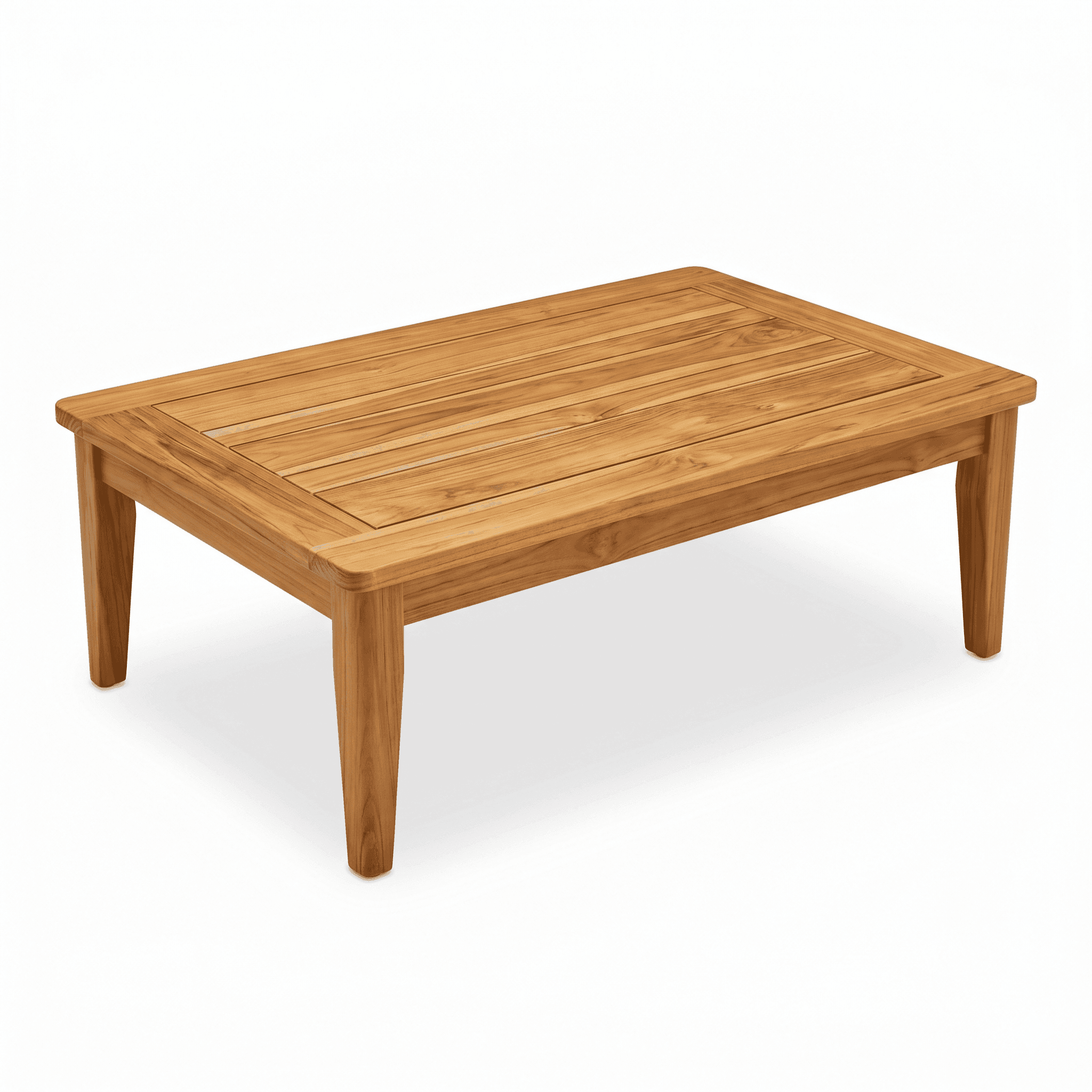
Teak has been the preferred wood of shipbuilders for three hundred years.
The British Royal Navy used it for decks. The Burmese royal family built their palace floors from it. Danish modernist furniture makers chose it for the same reason Italian designers choose it today: it is the one hardwood that behaves outdoors the way most woods only behave indoors.
Here is what makes it different.
Teak has such a high natural oil content that water runs off it like off a waxed surface. It resists rot, insects, and warp without any treatment at all.
That oil is the entire story.
Unlike most hardwoods, which need to be sealed, stained, or oiled to survive outdoors, Grade-A teak can be placed on a terrace and ignored for thirty years. The oils in the wood — natural resins that the living tree produced over decades — continue to protect the timber long after harvest.
Over time, untreated teak develops a distinctive silver-grey patina. Some people love this. Others prefer to preserve the warm honey tone of fresh teak. Both are valid.
To preserve the honey tone: apply teak oil once a year in spring. Clean the wood first with mild soap and water, let it dry fully, then rub a thin coat of oil into the grain with a soft cloth. The colour will return to its original warmth in minutes.
To encourage the patina: do nothing. Clean occasionally. Let the sun and rain do their work. Within 12-18 months, the wood will settle into a soft silver-grey that reads as elegance, not neglect.
Whatever you choose, a few things to avoid: pressure washers (they erode the grain), harsh chemical cleaners (they strip the oil), and teak “sealers” sold by hardware stores (they trap moisture and cause the wood to rot from within).
Teak is the rare material where doing nothing is a form of care.
A note on sourcing.
Teak from unmanaged plantations is a serious environmental problem. All Verdano teak is FSC-certified or verified as responsible forestry, sourced from managed plantations where each tree is catalogued and replaced. The difference in quality is real — plantation teak has tighter grain and more consistent oil content than unmanaged alternatives — and the ethical difference is non-negotiable.
Well-sourced, well-made teak furniture will outlive you.
That’s the whole reason we work with it.